
The longer answer is more useful because your timeline has two parts that move at different speeds. Once you understand both, you can plan your own path with confidence.
How Long Does It Take to Become a Midwife’s Assistant?
“How long will this take me?” It is usually the second question I hear, right after “Can I really do this?”
The short answer: you set the pace. Our Midwife’s Assistant Certification is online and self-paced, so there is no semester to wait for and no deadline to miss. [Most students finish in 8- 12 months]
First, what are you training to do?
A midwife’s assistant works alongside a midwife through pregnancy, birth, and the postpartum weeks. You are a trained second set of hands and a familiar face for the family.
The role is not independent practice. Midwife’s assistants are not medical caregivers and do not deliver babies on their own. You work under the direction of an experienced midwife, and you learn specific basic assessment skills that you are trained and signed off to perform.
That matters for your timeline. You are not only learning information. You are learning skills with your hands, and those take practice with a real midwife beside you.
The two parts of your timeline
Part one: the coursework
This is the part you control completely. Your online classroom holds more than 900 pages of course content and more than 70 lectures from instructors and guest experts. You can save or print the materials and work through them whenever your schedule allows.
You will study:
- The history of birth work and midwifery
- Anatomy of pregnancy, birth, and lactation
- Prenatal care, labor support, and postpartum skills
- Clinical assistant skills and universal precautions
- Nutrition, adjunct therapies, and herbal support
- Communication, cultural diversity, and humility in birth work
- Business skills
A student who studies a few hours a week will move steadily. A student who can give it more time will move faster. Neither one is doing it wrong.
Part two: the hands-on skills
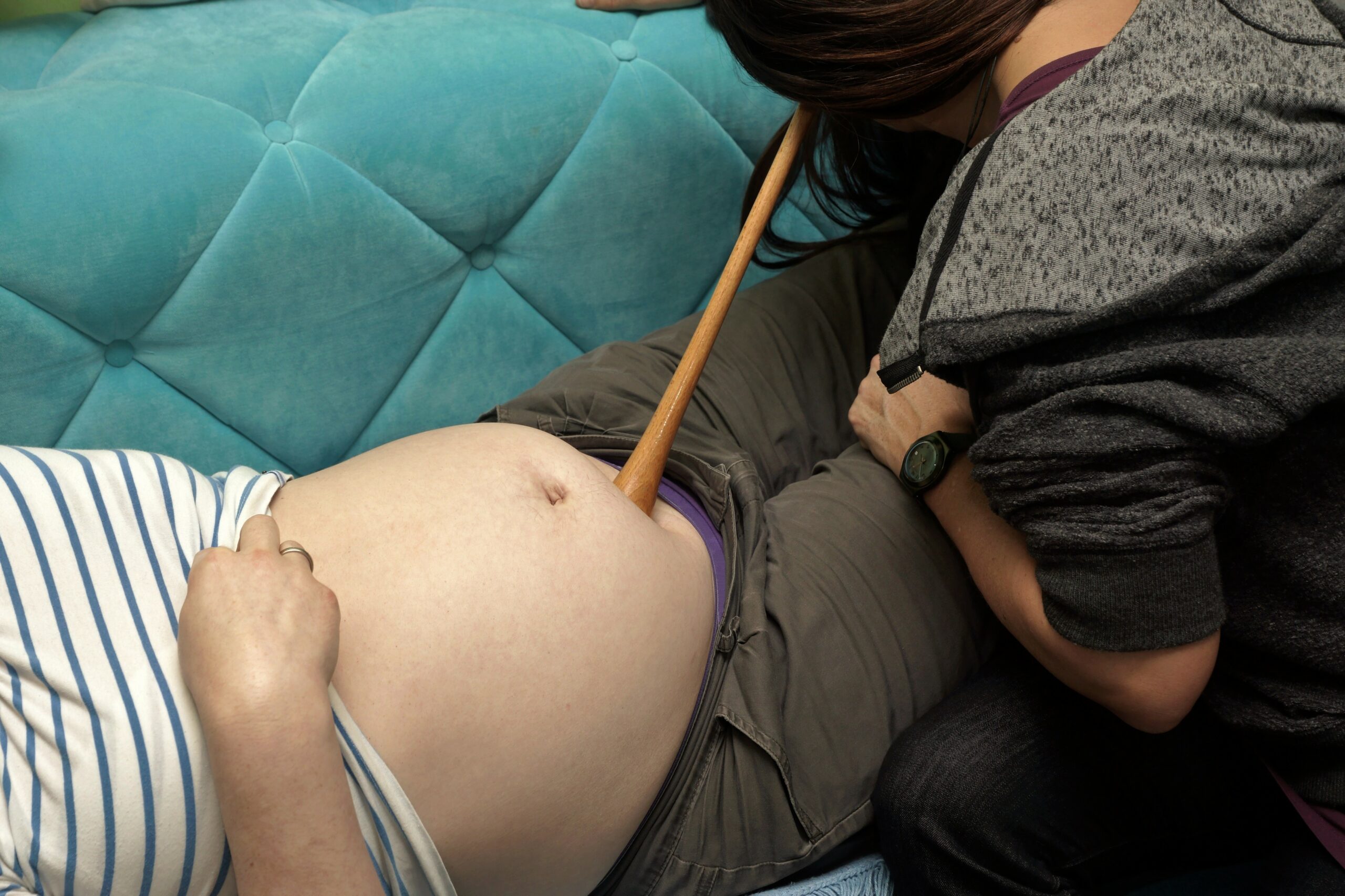
This is the part that depends on other people. In our program you work with a local midwife to practice and get signed off on more than 20 NARM Level I skills. These include blood pressure, fetal heart tones, urine collection, blood loss assessment, setting up a sterile field, and gloving.
You cannot rush a skill into your hands, and you cannot schedule a birth. How quickly this part goes depends on how soon you connect with a midwife, how busy their practice is, and how often you can be there.
What speeds you up, and what slows you down
|
Moves you faster |
Slows you down |
|---|---|
|
A set study time each week, even a short one |
Waiting for a “free month” that never comes |
|
Reaching out to local midwives early |
Leaving the midwife search until the coursework is done |
|
Doula, nursing, or other birth experience |
Starting brand new (you will get there, it simply takes longer) |
|
A busy midwife who welcomes students |
Living where home birth midwives are few or far away |
|
Asking questions as soon as you are stuck |
Sitting on a question for weeks |
The most common delay I see is the second one. Students finish every lesson, then begin looking for a midwife and lose months. Start those conversations in your first few weeks.


A simple plan for your first months
You do not need a perfect schedule. You need a next step. Here is the order I suggest.
- Settle in. Log in to your classroom, look over the program catalog, and choose your weekly study time.
- Start the foundations. Begin with history, anatomy, and universal precautions, so you have the language midwives use.
- Introduce yourself to local midwives. Tell them you are a student and ask how they work with assistants. Do this early, while you are still in the first lessons.
- Study and observe side by side. Keep moving through the coursework while you begin spending time with a midwife.
- Practice your skills. Work on each skill until it feels steady, then ask for your sign-off.
- Finish and certify. Complete your remaining coursework and skills assessments.
Steps four and five overlap for most students, and that overlap is what keeps the whole process from dragging.
If you already have experience
Doulas, nurses, and other birth workers often move through the early material quickly. You already know how labor unfolds and how to be useful in a birth room.
The hands-on skills are a different matter. Even experienced doulas are usually new to taking blood pressure or listening for fetal heart tones, so give that part its full time.
If you are a nurse, check with your nursing board before you work as a midwife’s assistant. Some boards have rules about holding both roles.
And if you are brand new to birth work, welcome. You may also want to look at our Doula Certification, since the two programs support each other well.
Is this a step toward becoming a midwife?
For many students, yes. The skills you are signed off on are first-level NARM skills, the same foundation used on the path to the Certified Professional Midwife (CPM) credential. If you go on to midwifery training, you arrive with real experience and a working relationship with a midwife.
A few honest notes. This certification is not a midwifery license, and it does not let you practice on your own. Midwifery laws also differ from state to state, so check the rules where you live before you plan your next step.
Some students discover that assisting is exactly where they want to stay. That is a fine outcome too. Good assistants are valued, and midwives remember the ones they can count on.
The real answer
How long does it take to become a midwife’s assistant? As long as it takes you to learn the material well and earn your skills honestly. For some students that is a focused stretch. For others it unfolds around children, jobs, and moves. Both get you to the same place.
What I can promise is that you will not do it alone. You will have your classroom, your fellow students around the world, and a director who answers your questions.
Tuition is $2,750, or nine monthly payments of $335.
Ready to begin? Learn more about the Midwife’s Assistant Certification, or call or text us at 866-303-4372. We are glad to help you map out your own timeline.
Birth Arts International has trained birth workers since 2000. We will walk with you on your path.